Automate Customer Support
Answers recurring questions from the knowledge base, captures leads mid-conversation, and hands off to your team with contact details and the full message history.
Nivon can handle common customer questions, collect visitor details, and send conversations to your support team when human help is needed.
Support Automation
Nivon uses the agent's knowledge and settings to answer customer questions.
Common support topics include:
- Product questions
- Pricing
- Account access
- Troubleshooting
- Refunds and policies
- Product documentation
The agent can handle these conversations without requiring your team to reply to every question.
Use the Knowledge Base to control the information Nivon can use when answering customers.
Lead Collection
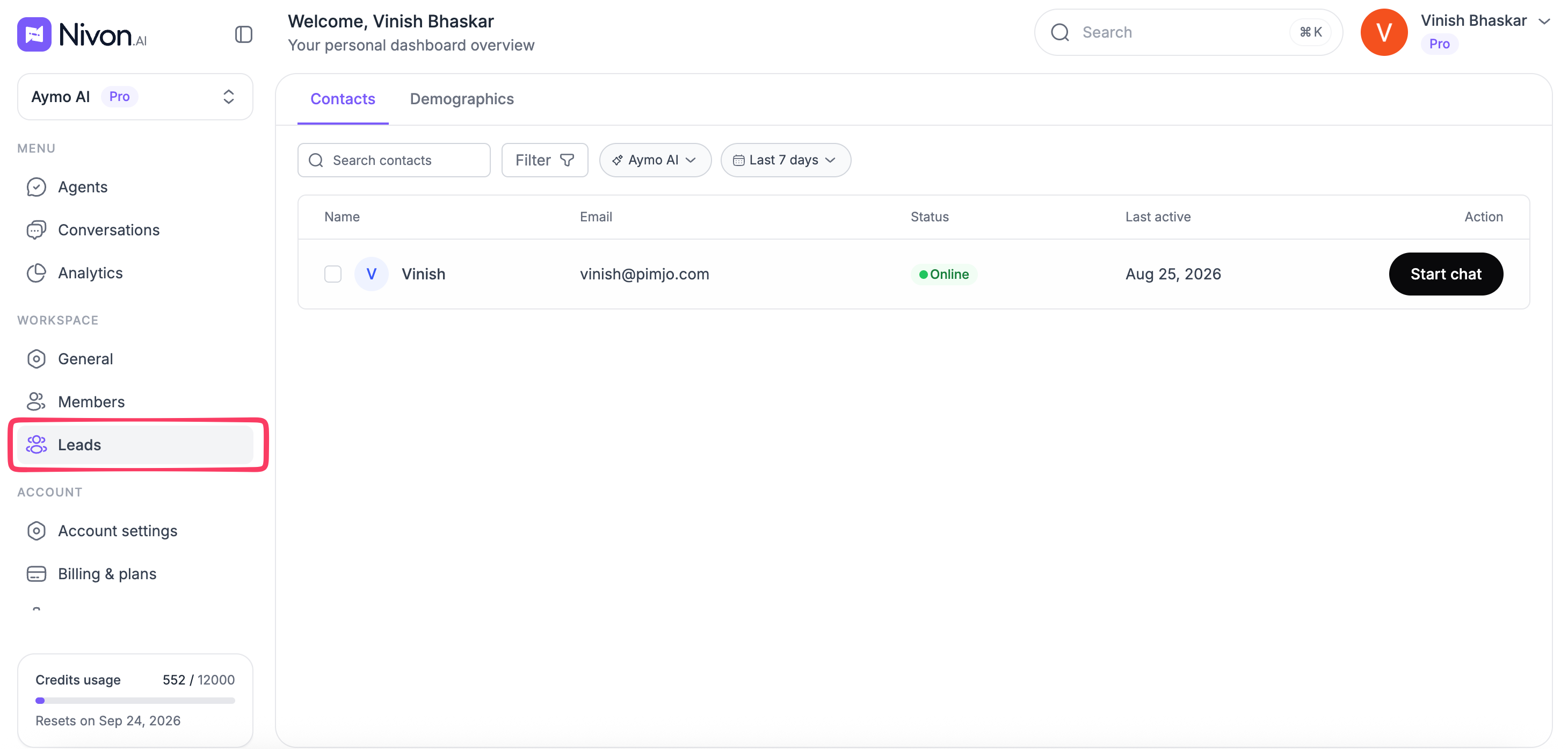
Nivon can collect visitor details during a conversation.
The lead form can collect:
- Name
Using Lead First when collecting visitor information is the main goal of the conversation. With Chat First, the agent focuses on helping the visitor before lead collection.
Collected contact details are available in Leads and can also be viewed with the related conversation.
Hand off to your team
Escalation moves a conversation from AI support to human follow-up. Nivon first collects contact details, then marks the conversation for review.
How escalation works
- The customer asks for help.
- Nivon determines that human support is needed.
- The agent asks for the customer's name and email.
- The customer submits the details.
- Nivon saves the contact information.
- The conversation is marked as Needs human.
- Your team reviews the conversation and follows up.
The visitor sees a message explaining that the request has been escalated and that the team will follow up.
What your team receives
The conversation remains available with:
- The full conversation thread
- Customer name
- Customer email
- Conversation status
- Customer profile
Reply to the customer by email directly from the conversation.
Last updated: August 24, 2026