AI agent vs Chatbot
A chatbot follows predefined conversations. An AI agent uses available knowledge and context to handle a wider range of customer requests.
Chatbot
Traditional chatbots usually rely on fixed rules, flows, or scripted responses.
For example, a password reset flow might ask a customer to:
- Select Account
- Select Password
- Select Reset password
This works well for simple and predictable tasks. It becomes harder to maintain when customers ask questions outside the defined flow.
AI agent
An AI agent can understand different ways customers ask a question and use available information to respond.
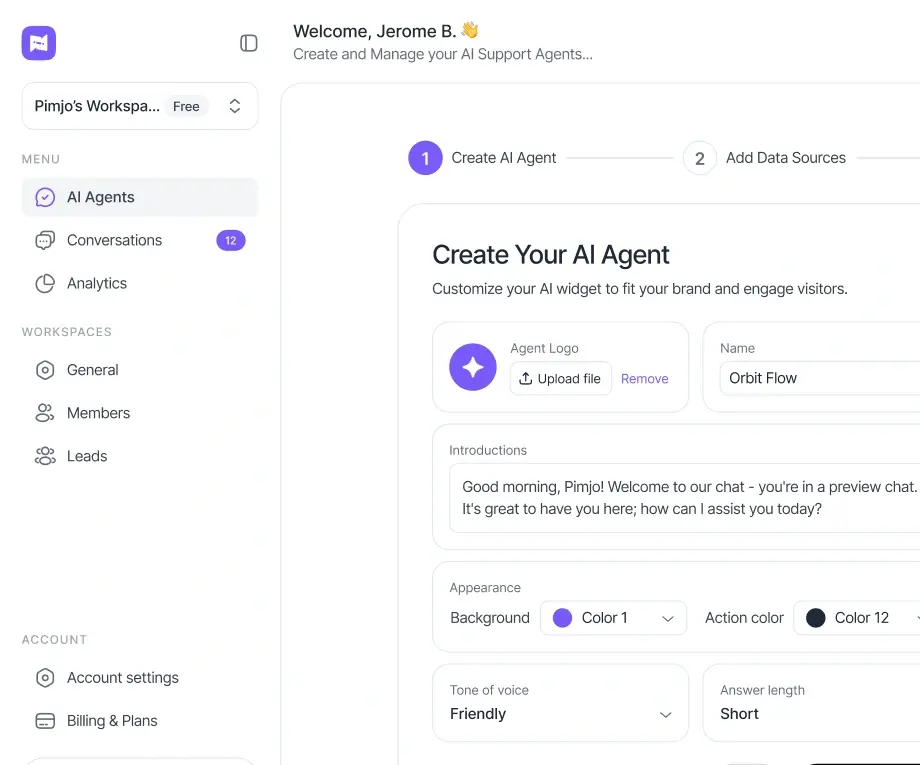
Depending on its configuration, an AI agent can:
- Understand customer intent
- Use connected knowledge to answer questions
- Use conversation context
- Ask for more information
- Capture leads
- Hand off conversations to a human
An AI agent can also use tools and perform actions when those capabilities are available.
Where Nivon fits
Nivon is an AI customer support agent trained on your website, docs, files, and past conversations.
It can:
- Answer recurring customer questions
- Handle repetitive support requests
- Capture leads
- Hand conversations to your team when human support is needed
Common support questions include:
- Product questions
- Pricing
- Shipping
- Refunds
- Account access
- Documentation
- Password resets
When to use a chatbot
A traditional chatbot can work well for:
- Fixed FAQs
- Simple navigation
- Basic information
- Predefined workflows
- Structured data collection
When to use an AI agent
An AI agent is useful when customers ask questions in different ways or when responses require business knowledge and conversational context.
For customer support, this reduces the need to create a separate flow for every possible question.
In simple terms
A chatbot follows predefined paths. An AI agent uses available knowledge and context to handle customer requests.
Last updated: August 19, 2026