Introducing Nivon.AI: AI Support Agent That Answer Like Your Team
Nivon builds AI customer support agents trained on your website, documents, and help content. Answer repeat questions instantly and escalate the rest to your team.

Vinish Bhaskar
Sep 10, 2026
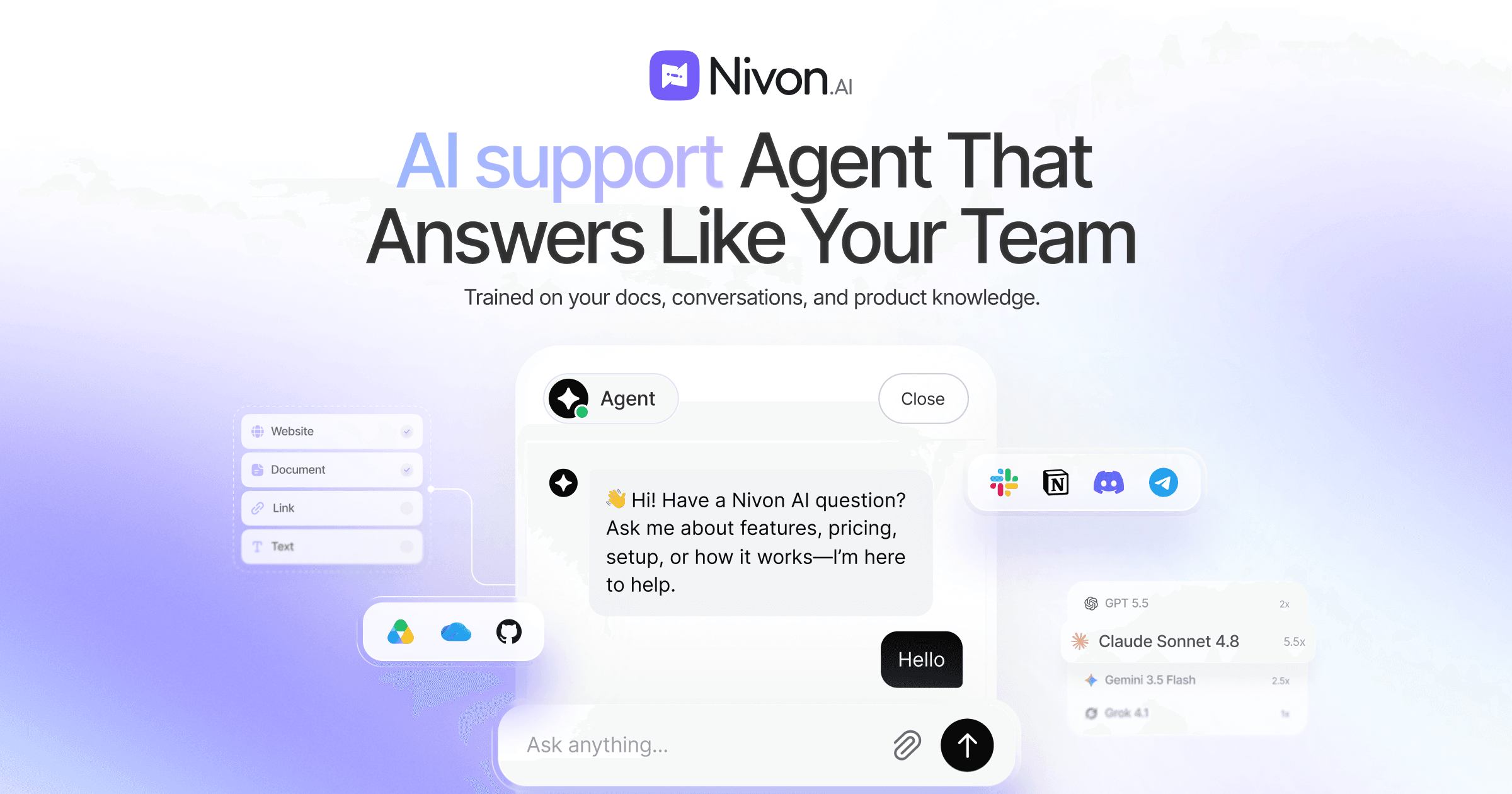
Introducing Nivon.AI
Nivon is an AI support agent built by Pimjo. It helps to create a custom AI agent for your website in minutes, trained on your docs and past conversations, so repeat customer questions get answered without reaching your team.
We did not set out to build a support product. We set out to ship products, and we shipped more than a dozen across the Pimjo ecosystem.
The queue grew.
The same questions are repeated across different products.
Refunds, Integrations, and Where to find an API key?
Every one of those answers already existed in our documentation. Customers still waited for hours for someone to point them to it.
We pulled in people from other departments. The queue kept growing anyway.
Then we added a chatbot.
It answered confidently and often wrongly, which was worse than no answer. An incorrect answer with no source is acted on, and then the customer writes in again.
Then we looked at the invoice.
Our support tool costs more than it did the year before. Not because we served more customers. Because more people across the company now needed a seat, the tool charged us for each one.
Support volume scales with the amount of product you have, not with the number of people you employ. Most tools price it the other way around.
Every support tool we used made more money when we grew. So we built one that does not.
Why the usual fixes fail
Most teams try the same three things before they try an AI agent. Each fails for a different reason, and none fail because the team executed badly.
Hiring
Adding headcount treats a volume problem as a staffing problem. The two do not move together.
- Cost rises in a straight line. Ticket volume does not.
- Add a person in month one and another in month four, and the repeat questions keep arriving at the same rate.
- You have bought capacity, not resolution.
Generic chatbots
A scripted bot performs well inside its script and badly everywhere else.
- Ask it something slightly outside its script, and it produces a fluent answer with nothing behind it.
- The customer has no way to check where the answer came from.
- When the question is genuinely hard, the bot cannot hand the conversation off to someone who could solve it.
Static help centers
A help center is a snapshot. Your product is not.
- Articles are correct on the day you write them.
- You change your pricing, but the help center keeps responding with last quarter's pricing page.
- It stays wrong until someone remembers to update it.
Why is this solvable now?
What changed recently is accuracy. Models are now good enough to answer from a defined set of documents you control, instead of generating an answer from whatever they absorbed in training. The tickets that reach a person are the ones that need one.
What is Nivon.AI
On day one, the repeat questions stop reaching your team. The ones you have answered a hundred times get answered again, without anyone on your team touching them. Your queue holds only the work that needs a person.
Nivon builds AI support agents trained on your own content. That means your website, docs, PDFs, FAQs, and past support tickets. The agent answers from that material. It sounds like your team, not like a model that has never been aware of your product.
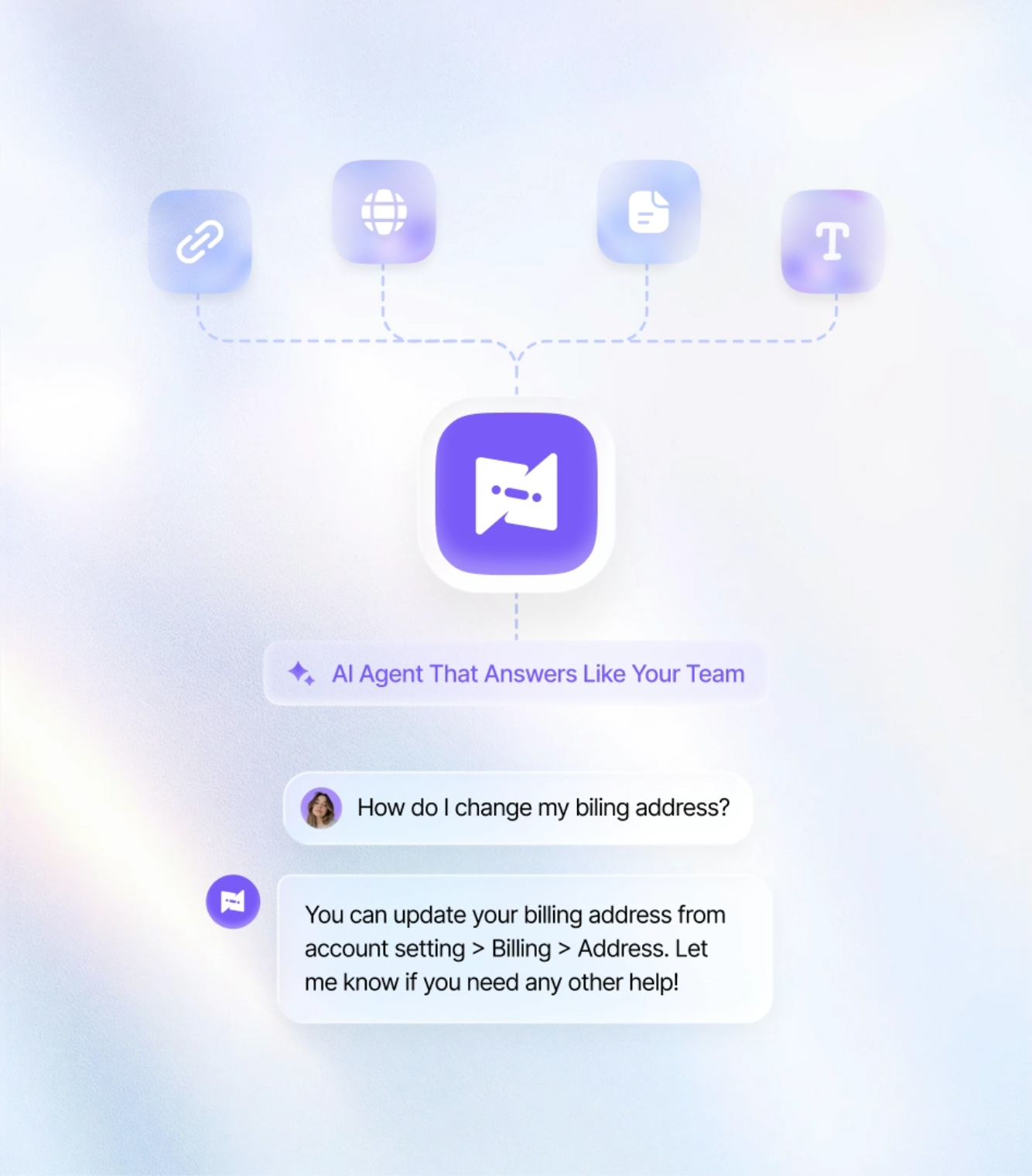
When the agent cannot answer, it does not guess. It passes the conversation to your team with the full thread attached. Whoever picks it up already knows what the customer asked and what the agent said.
Setup takes minutes, and you do not need a developer.
Key features
- Multiple sources: Crawl a website or sitemap, upload documents or import from Google Drive or OneDrive, add FAQs, paste text, or import past support tickets.
- Model choice per agent: Pick from 20+ leading AI models across OpenAI, Anthropic, Google, and xAI. Switch any time.
- Agent Guardrails: Define what the agent handles, what it refuses, what it never shares, and when it escalates.
- 95+ languages: The agent replies in the language each customer writes in.
- Workspaces: Keep agents, conversations, and knowledge apart across teams or products, with admin and member roles per workspace.
- Chat First or Lead First: Choose whether the agent answers questions or qualifies the visitor first.
- Analytics: Conversation volume, resolution rate, response time, and where customers write from.
- Integrations (soon): Slack, GitHub, and Telegram.
Everything runs from one dashboard, whether you have one agent or one per product.
What happened when we ran it on our own products
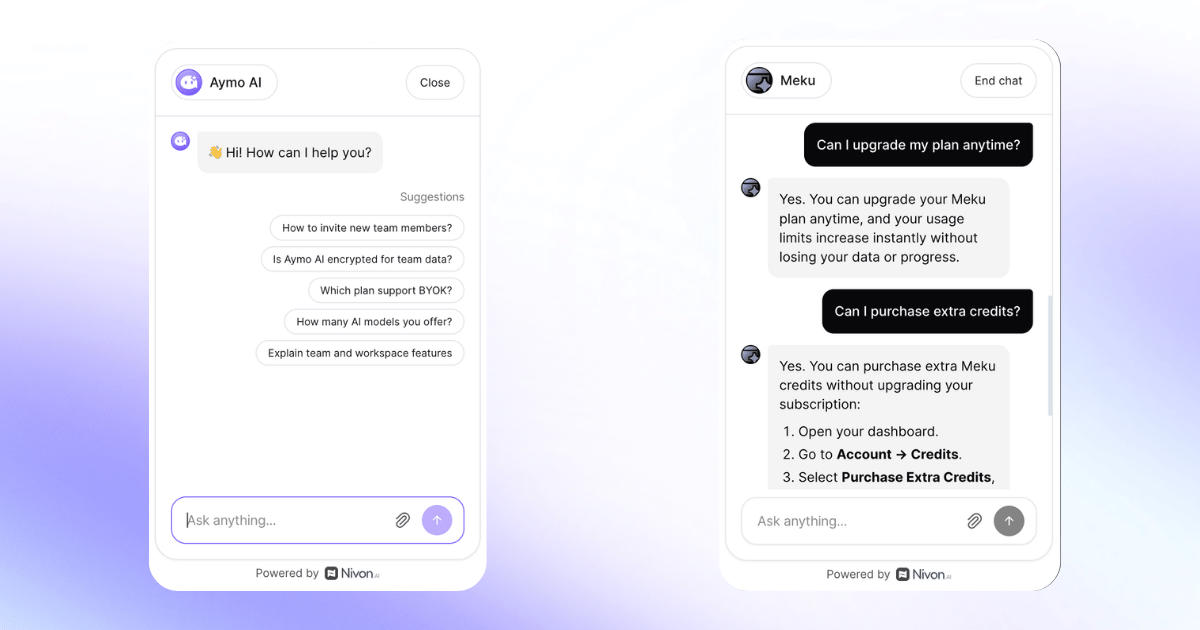
We ran Nivon on our own products before we sold it to anyone. Aymo AI and Meku.dev used it in production for 45 days while we decided whether it was ready to ship.
We were about to ask other teams to put an AI agent in front of their customers, and we would not do that with a product tested only against our own questions.
Deflection means the agent resolves a conversation without a person picking it up.
What we measured, over those 45 days, across both products:
- Tickets reaching a human dropped by 73%.
- Time to first response went from 15 minutes to 6 minutes.
- Of the conversations that happened in the widget, the agent resolved 80% without a person.
These numbers measure different things. Most of the ticket drop comes from customers using the widget instead of filing a ticket in the first place. Of those who used it, the agent handled it independently.
These are our own numbers, not an industry benchmark. Your results depend on how complete your documentation is and on what your customers ask for.
Before Nivon, our team spent most of its time answering questions that our docs already covered.
Now customers get those answers as soon as they ask. The tickets that reach a person are the ones that are needed.
How Nivon works
Nivon runs on what you already have, not on a script someone wrote in advance.
- It reads your content: Your website, docs, FAQs, and past support tickets become the agent's knowledge base.
- It follows the conversation: the agent uses the full thread, not just the last message, so the customer never has to repeat themselves.
- It answers on its own: Inside its scope, it handles the conversation start to finish. No routine question waits for a person.
- It stops at the edge: Outside its scope, it does not guess. It says it cannot confirm the answer.
- It hands off with context: Complex issues go to your team as a ticket with the full thread attached. Whoever picks it up already knows what was asked and what the agent said.
- It gets better as your content does: Each handoff shows you a gap. Add the missing answer, and the agent handles that question itself next time.
Start with the quickstart guide to build your AI customer support agent.
Pricing
Most support tools charge for every team member. Teams then limit who gets an account to control the bill, which locks out the people closest to the customer.
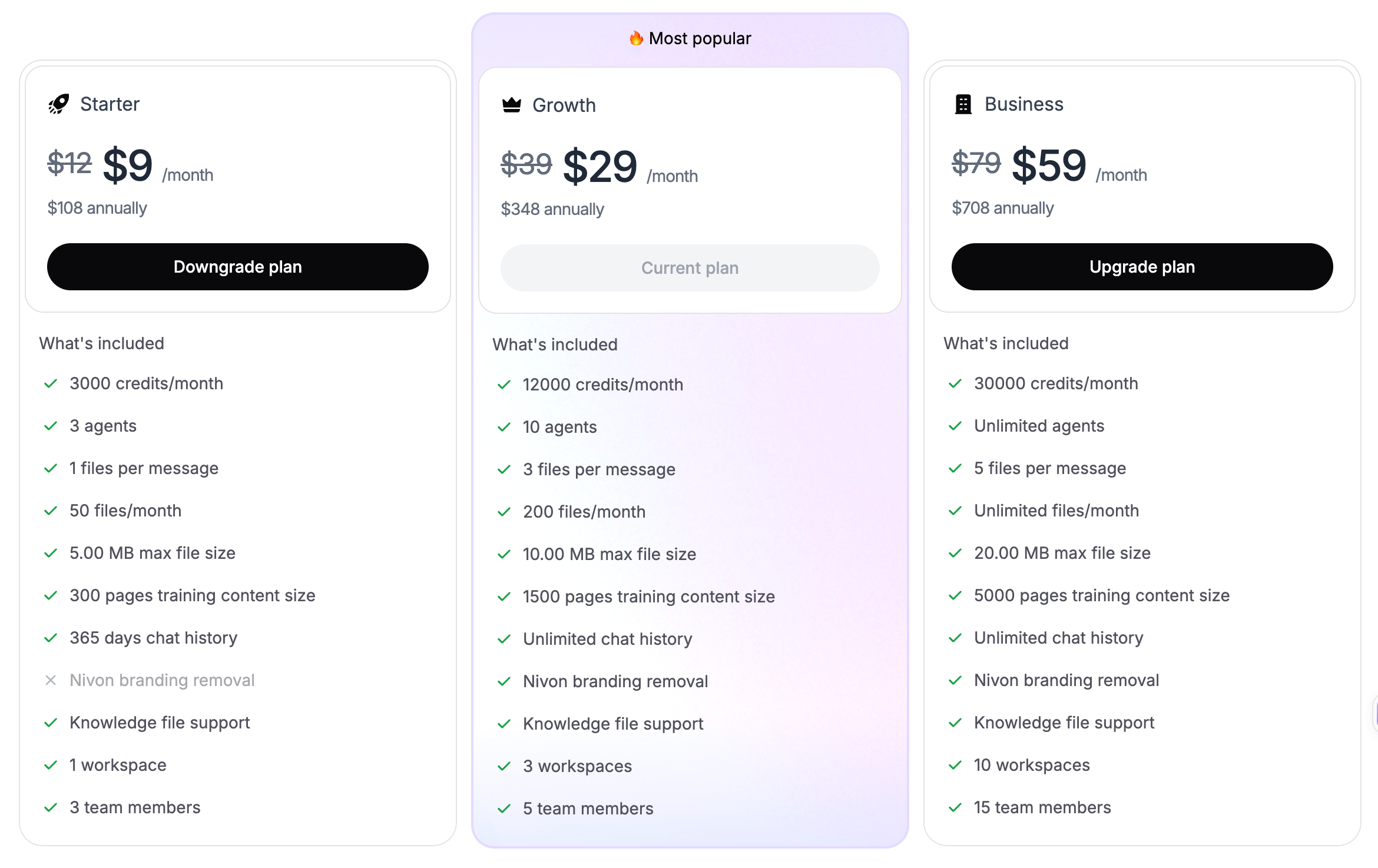
Nivon has no per-seat fee. Plans are priced by support volume instead.
- Free: $0, 150 credits/month, 1 team member
- Starter: $9/mo, 3,000 credits/month, 3 team members
- Growth: $29/mo, 12,000 credits/month, 5 team members
- Business: $59/mo, 30,000 credits/month, 15 team members
Each plan sets a team member limit, so seats are included up to that number rather than billed per head. Every plan also caps the number of AI agents, workspaces, and training pages. The free plan does not expire.
Control and trust
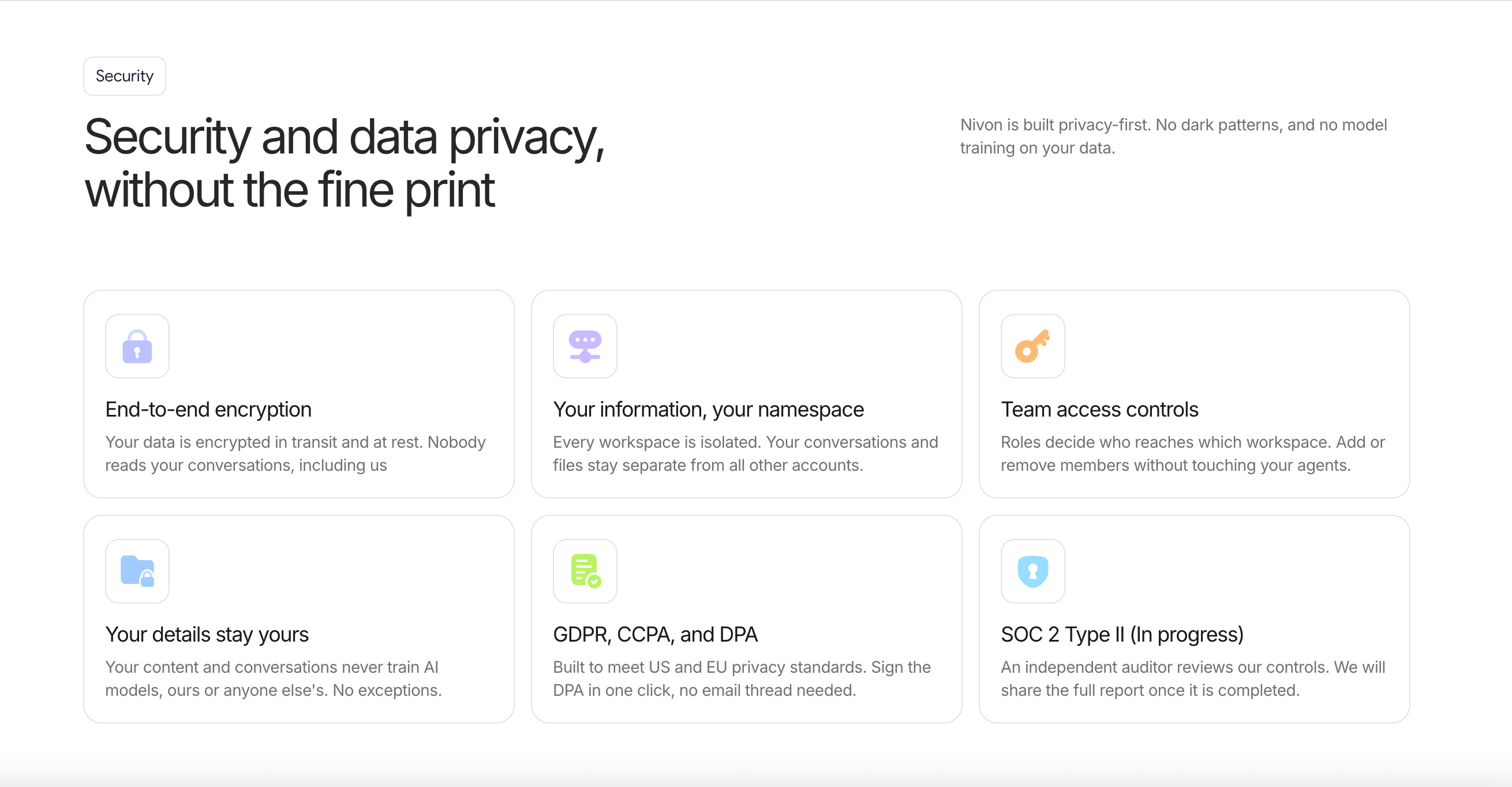
Before you put an AI agent in front of customers, you need to know what happens when it gets something wrong.
- It answers from your content: Nivon draws on the sources you connect. When it cannot find an answer, it hands the conversation over.
- Internal stays internal: Run separate agents with separate knowledge bases for customers and staff. Internal policy never reaches a customer.
- You set the boundaries: Allowed domain rules keep each agent on the sites you assign it to.
- Escalations carry context: Every handoff includes the full conversation, so your team never asks a customer to repeat the problem.
- Your data stays yours: Content and conversations are encrypted in transit and at rest. Every workspace is isolated. Nothing you send trains an AI model, ours or anyone else's.
Nivon meets GDPR, CCPA, and ISO 27001 level requirements. SOC 2 Type II compliance is currently in progress, and we will publish the report once it is complete.
Where Nivon fits
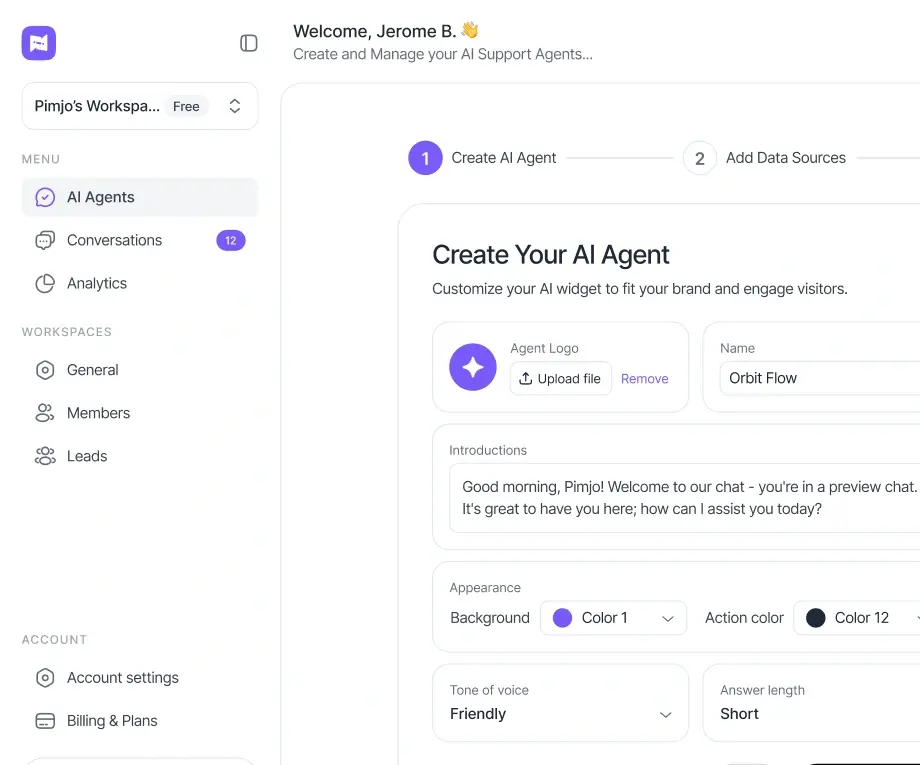
Nivon does not replace the tools your team already uses.
It runs on your website and handles the volume that never needed a person. Anything it cannot resolve becomes a ticket with the full conversation attached, so whoever picks it up already has the context.
Your team keeps their current tools and their current workflow. Nothing gets migrated. Nobody learns a new ticketing system.
If your helpdesk works, keep it.
What comes next
We are connecting Nivon to the places your content and your team already live. Here is where each integration stands today.
Live now
- Google Drive
- OneDrive
In progress
- Slack
- GitHub
- Telegram
In review
- Notion
Current status is always at nivon.ai/roadmap.
Try it
Start free at Nivon.AI. No card required, and the free plan never expires.
Running support across several products or a larger team? Talk to us, and we will help you scope it.
Built by the team running Pimjo's own products on it, and priced so that growing your team does not grow your bill.