What is AI Ticket Deflection? Tools, Benchmarks, and Costs
Ticket deflection resolves support requests through self-service before they become tickets. Real deflection rate benchmarks, seven tools compared, and what each costs.

Vinish Bhaskar
Sep 11, 2026
AI ticket deflection is when an AI agent answers a customer's question so it never becomes a support ticket. The customer gets an answer in the chat. Your team never sees a ticket.
That is the simple part. The hard part is knowing whether it worked, and what it cost you.
Most vendors quote a deflection rate. Few explain how they calculated it. Fewer still explain that some pricing models charge you more every time the AI succeeds.
This page covers how ticket deflection works, realistic deflection rates, seven tools that reduce support volume, and the cost of each.
How ticket deflection works
Traditional self-service made the customer do the work. They searched your help center, read knowledge base articles, and worked out which one applied. Many gave up and opened a ticket anyway.
AI ticket deflection answers the query directly. The customer types in natural language. The AI agent reads your knowledge base, help center, FAQ pages, and ticket history, and then replies with a specific answer rather than a list of links.
Three things happen in a working setup:
- The customer asks a question in the chat widget, self-service portal, or ticket form.
- The AI agent finds the answer in your content and resolves the issue.
- If it cannot answer, it escalates the case to a human agent, attaching the full conversation.
That third step matters more than people expect. An AI agent that cannot escalate cleanly damages the customer experience instead of improving it.
Here is a simple example of ticket deflection. A customer wants to reset a password. Older self-service returns five knowledge base articles. An AI agent walks them through the steps and confirms it worked. No ticket created.
The support requests that deflect best are repetitive and well-documented. Password resets, order status, billing questions, and refund policies. Complex issues still need your support team.
How to measure?
Here is the problem nobody warns you about. There is no single ticket deflection formula.
Zendesk publishes:
total help center users ÷ total users in tickets. That returns a ratio. 4 self-service users per ticket give you 4.
Decagon publishes:
deflected contacts ÷ total contact attempts × 100 That returns a percentage. The same traffic gives you 80%.
A third convention counts sessions:
(self-service sessions − tickets created) ÷ self-service sessions × 100.
A fourth is the strictest. It only counts a deflection if the customer did not come back about the same issue within 24 to 72 hours. That is the closest thing to true deflection.
So when a vendor quotes a deflection rate, ask which formula they used before comparing it to anything.
Note that case deflection means the same thing. Teams using CRM tools such as Salesforce call the record a case. Teams using a help desk call it a ticket. The metric is identical.
False deflection
A deflection counts as an exit, not an outcome.
If a customer receives an unhelpful answer and closes the chat, most systems count it as a deflection. The problem is not solved. They will email, call back, or leave.
This is false deflection, and it inflates every number you see.
Three signals catch it:
- Re-contact rate. How many customers return within 24 to 48 hours? Track this from week one.
- Article helpfulness ratings. Did the answer actually land?
- Zero-result searches. What your self-service resources do not cover.
A chatbot that ends conversations is easy to build. One that finishes the job is not. Measuring deflection without these three signals tells you a third of the story.
What is a good deflection rate?
Deflection rates vary by product complexity and content quality.
By industry, Decagon publishes these bands:
| Industry | Deflection rate |
|---|---|
| E-commerce | 55% to 75% |
| SaaS | 40% to 60% |
| Financial services and healthcare | 25% to 45% |
By setup, SupportWire publishes these:
| Setup | Deflection rate |
|---|---|
| Help center only | 20% to 30% |
| Knowledge base plus AI agent | 40% to 60% |
| Narrow product, heavily templated | 60% to 70%+ |
Both agree on the shape. A help center alone reaches 20%-30%. Adding an AI agent that resolves conversations roughly doubles it.
Two figures get quoted out of context. Gartner forecasts that agentic AI will autonomously resolve 80% of common customer service issues by 2029. Gartner also puts the present-day figure at roughly 14% of issues fully resolved in self-service today.
The 2029 date usually goes missing in the retelling. Treat 80% as a destination, not a benchmark for your current deflection.
If a vendor claims high deflection rates of 80% to 90% in month two, ask for re-contact rate and CSAT from the same set of conversations.
What Klarna's numbers showed
In February 2024, Klarna said an OpenAI-built assistant handled two-thirds of customer service chats, work equivalent to 700 agents, cutting resolution time from 11 minutes to under two.
In May 2025, CEO Sebastian Siemiatkowski told Bloomberg the company had gone too far. He said they focused too much on cost, and quality dropped. Klarna resumed hiring human agents.
The volume figure was true. The outcome underneath it was not good enough. That is the clearest argument against treating deflection success as a target in its own right.
7 tools for AI ticket deflection
These are grouped by how they bill you, because billing decides your cost more than any feature does.
Billed per resolution
Intercom Fin
Resolves customer questions end-to-end and runs on Zendesk, Salesforce, and HubSpot as well as Intercom. The most widely deployed AI support agent.
Billing: $0.99 per outcome, on a $49 monthly basis, including 50 resolutions.
An outcome is a resolution, a procedure handoff, or a disqualification. Failed attempts are free.
Gorgias
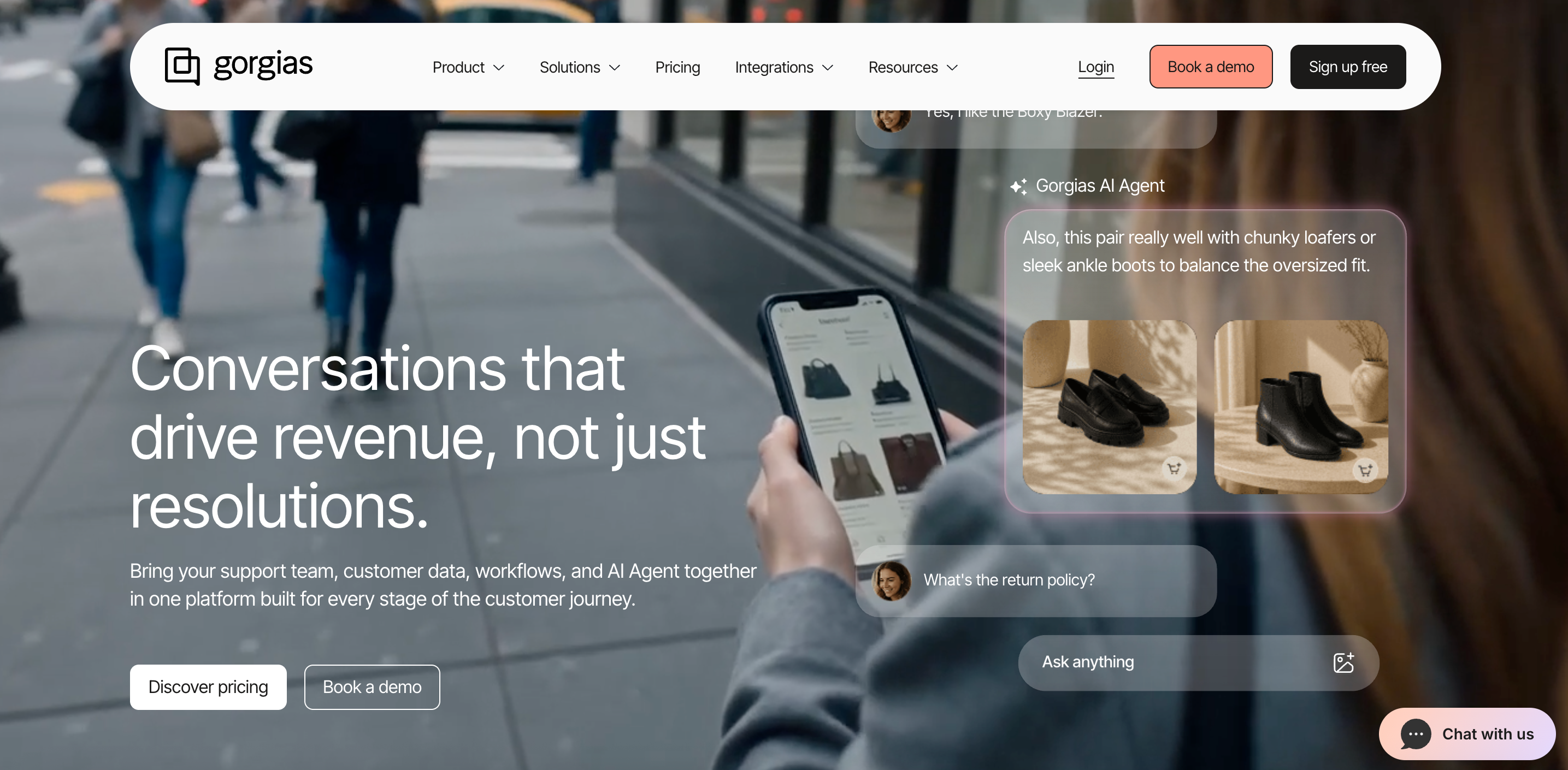
An e-commerce help desk with a native Shopify integration. Its AI Agent handles order status, returns, and product questions using your store data.
Billing: $0.90 per resolved conversation on annual billing, $1.00 monthly. Each AI resolution also counts as a billable ticket, so one conversation draws twice.
Billed per ticket or conversation
eesel AI
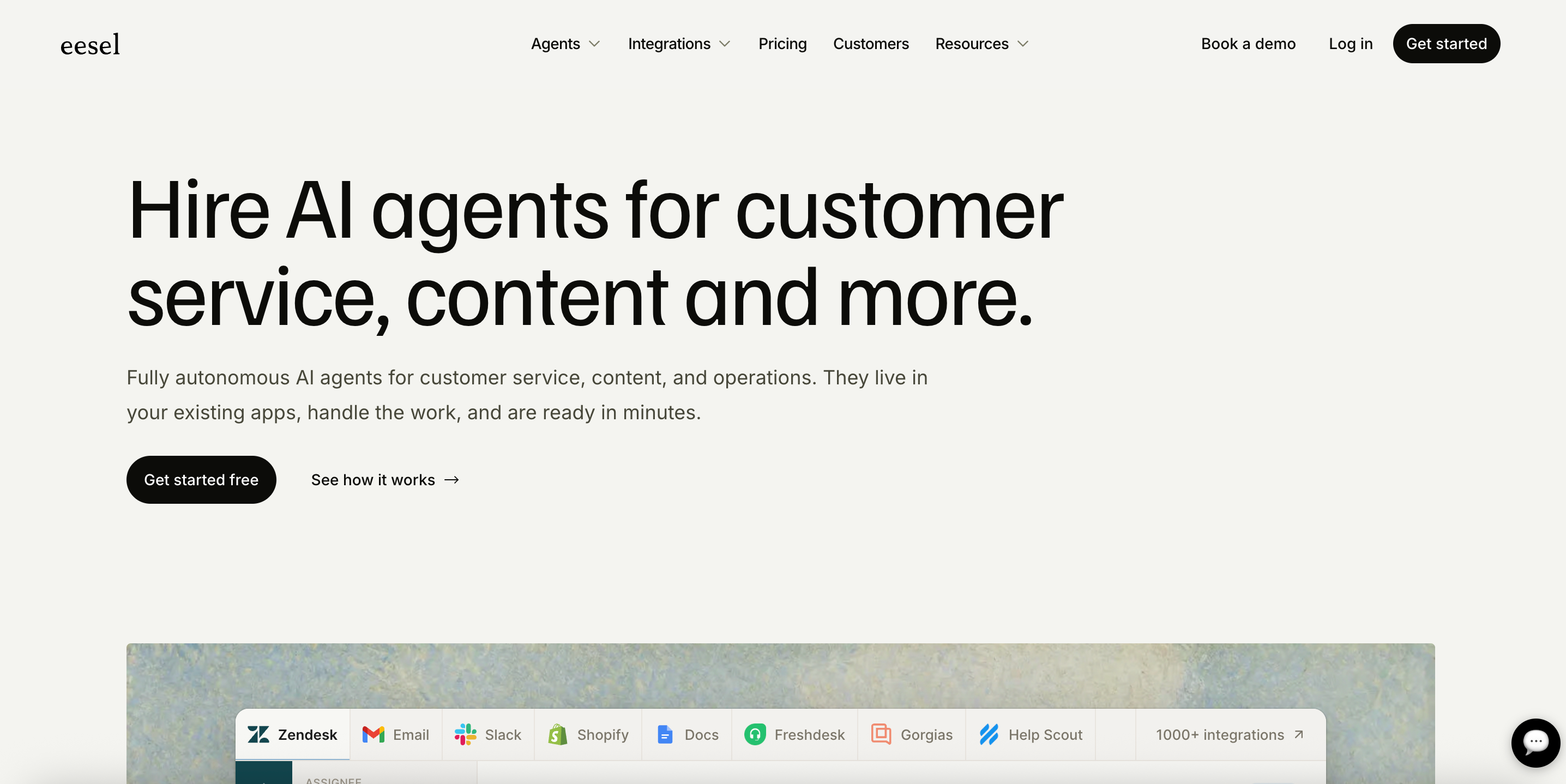
Runs inside Zendesk, Freshdesk, and Intercom. Trains on ticket history and help center articles, then drafts and resolves tickets in your existing queue.
Billing: $0.40 per ticket or chat session, regardless of how many messages it takes. No platform fee, no per-seat fee, no monthly minimum. $50 of free usage to start.
My AskAI
Also works inside your existing help desk, connecting to Zendesk, Intercom, Freshdesk, Gorgias, and HubSpot. Replies in over 95 languages.
Billing: $199 a month for 1,000 tickets, about $0.199 each. Scale costs $499 for 2,000, then $0.10 per extra ticket. You are billed whether or not the AI resolves the issue.
Billed per conversation, with live chat included
Tidio Lyro
Live chat, ticketing, and an AI agent from one vendor. Lyro is also sold standalone if you want to keep your current inbox.
Billing: $0.50 per Lyro conversation, billed as part of a $32.50 monthly add-on. One conversation means at least one AI reply, and extra replies still count as one.
Billed per message or flat plan
Nivon AI
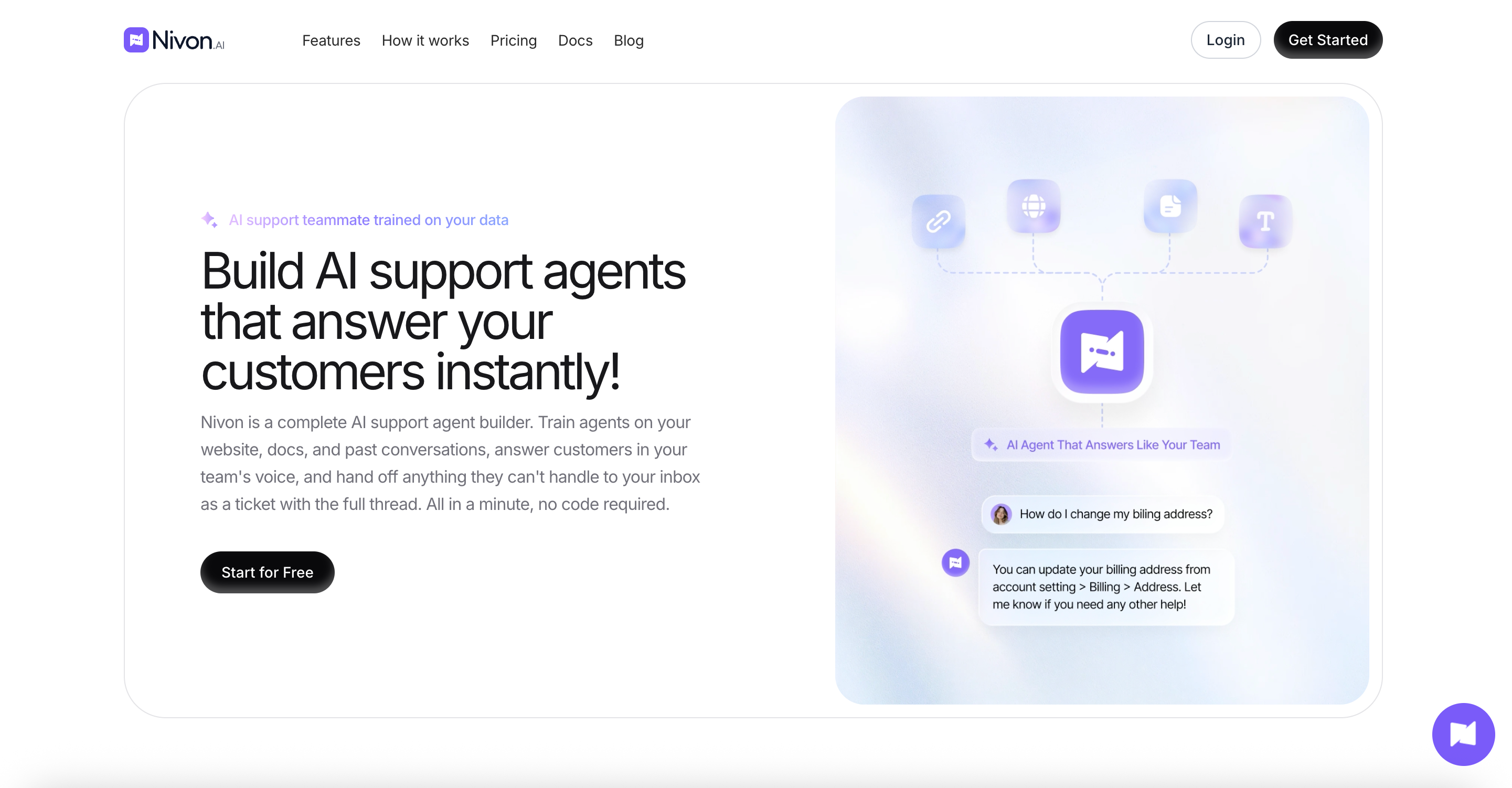
Trains on your website, in documents, on FAQ pages, and in past support tickets. Answers on your site and escalates with the full conversation attached, preventing ticket creation rather than resolving tickets after they arrive.
Billing: Flat plans from $12 a month for 3,000 messages, about $0.004 per message. One credit per message on any AI model. The free plan gives 150 messages.
Chatbase
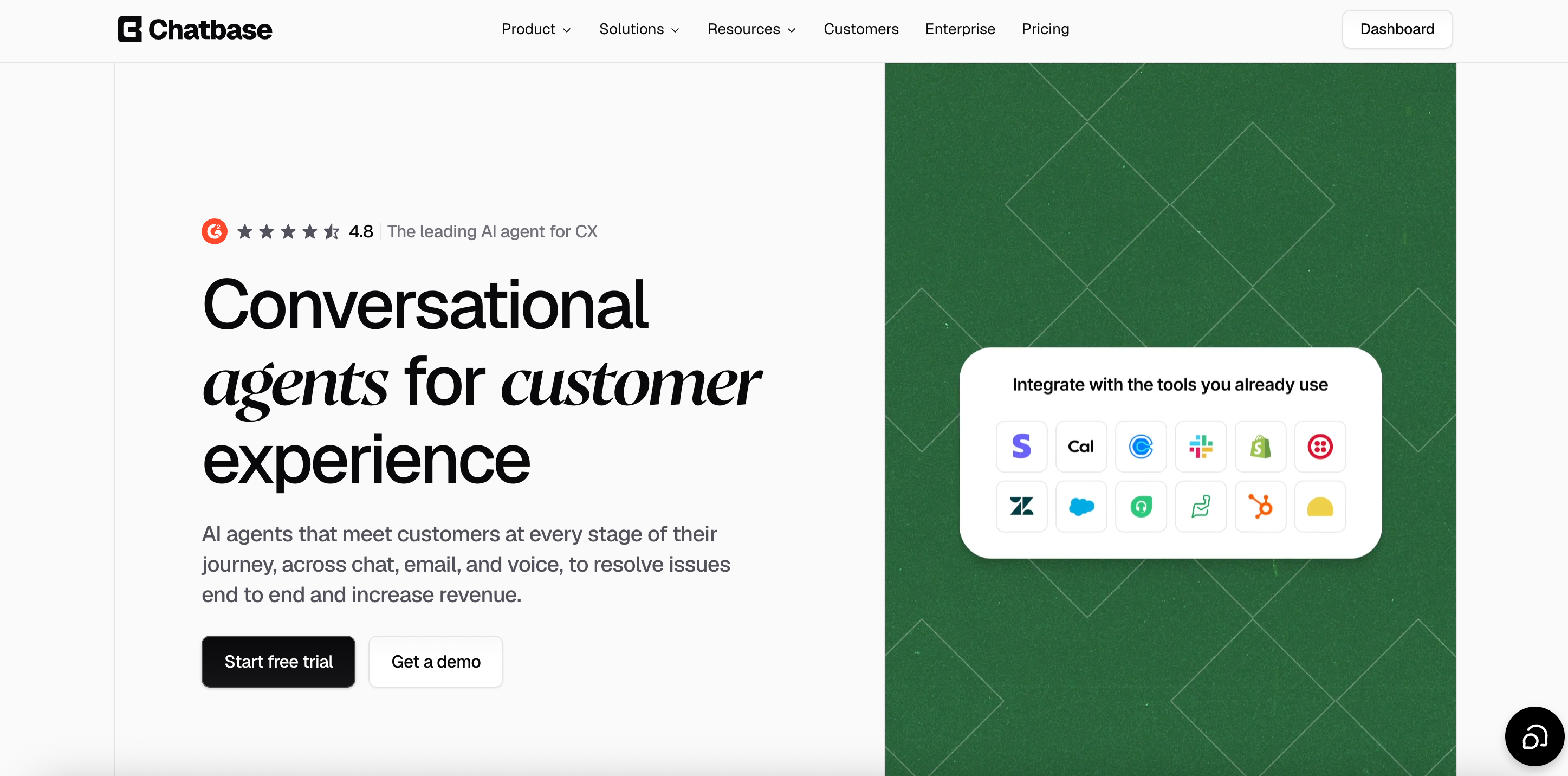
The widest integration list in this category, covering Zendesk, Intercom, Freshdesk, Salesforce, and Shopify. Adds voice and telephony from its Standard plan.
Billing: Message credits. $40 a month for 700 credits, $150 for 4,000, $500 for 15,000. Extra credits cost $40 per 1,000.
What each tool costs you
A human-handled ticket carries a loaded cost of roughly $5 to $12, covering salary, tooling, and overhead.
Here is what deflecting those tickets costs, assuming five AI messages per conversation.
| Deflected conversations per month | 500 | 2,000 | 6,000 |
|---|---|---|---|
| Intercom Fin | $544 | $2,029 | $5,989 |
| Gorgias | $450 | $1,800 | $5,400 |
| Tidio Lyro | $250 | $1,000 | $3,000 |
| eesel AI | $200 | $800 | $2,400 |
| My AskAI | $199 | $499 | $899 |
| Chatbase | $150 | $500 | Enterprise quote |
| Nivon | $12 | $39 | $79 |
Fin adds its $49 base to every figure. Gorgias also consumes your help desk ticket allowance. My AskAI's $0.10 rate only applies past its included 2,000. Nivon's published plans stop at 30,000 messages a month, which is about 6,000 conversations at five messages each. Chatbase's largest published plan covers 15,000 credits.
Your bill rises when the AI works
This is the part most ticket deflection guides skip.
Per-resolution pricing ties your cost to your success rate. Improve deflection, and you pay more.
Take a support team handling 2,000 tickets a month on Fin at $0.99:
- At 30% deflection, 600 resolutions cost $594 plus the $49 base
- At 60% deflection, 1,200 resolutions cost $1,188 plus the base
You doubled your deflection rate and doubled your AI bill.
The savings are still real. Those extra 600 deflected tickets were worth about $4,200 in agent time at $7 each. But $594 of it went back to the vendor.
On a flat plan, the second case costs exactly the same as the first.
There is a fair argument for per-resolution pricing. The vendor only earns when they resolve an issue, so their incentive aligns with yours. Fin charges nothing for a failed attempt. That alignment is worth paying for if answer quality is your main worry.
Just know what you are buying. Your AI cost becomes a fixed share of your ticket volume, permanently.
The other trap: conversation length
Per-message pricing has the opposite problem.
A chatbot that takes eight replies to answer what a human answers in two costs you four times as much. You pay for the inefficiency.
Per-conversation pricing ignores length completely. eesel AI charges $0.40 whether the thread runs two messages or twenty.
So the right model depends on your average conversation. Short exchanges favor per-message pricing. Long threads favor per-conversation pricing. Check your own transcripts before deciding. Most teams have never counted.
What to ask before you sign
Five questions that expose how a vendor actually bills:
- What exactly do you charge for? A resolution, a conversation, or a message.
- How do you define a resolution, and who decides? Ask whether an abandoned chat counts.
- Do you charge when the AI fails and escalates?
- What is the rate inside my allowance, not just the overage rate? These often differ.
- Does the AI interaction also consume my help desk plan?
Get the answers in writing. Two vendors quoting the same deflection rate may be measuring different things.
Frequently asked questions
What is AI ticket deflection?
AI ticket deflection is when an AI agent resolves a customer's question so it never becomes a support ticket for a person to handle. The AI reads your knowledge base, help center, and ticket history, then answers in the conversation. Anything it cannot handle escalates to a human agent.
What is a good ticket deflection rate?
It depends on your industry and setup. Decagon publishes bands of 55% to 75% for e-commerce, 40% to 60% for SaaS, and 25% to 45% for financial services and healthcare. A help center without AI usually reaches 20% to 30%. Gartner puts full self-service resolution at roughly 14% across all teams today.
How do you calculate ticket deflection rate?
There is no single formula. Zendesk divides help center users into those who filed tickets, returning a ratio. Decagon divides the number of deflected contacts by the total number of contact attempts and multiplies by 100 to return a percentage. A stricter method only counts a deflection if the customer did not return about the same issue within 24 to 72 hours.
How much does AI ticket deflection cost?
Between about $0.004 and $1.00 per interaction, depending on the billing model. Per-resolution tools charge $0.90 to $0.99. Per-conversation tools charge $0.40 to $0.50. Flat-plan tools work out near $0.004 per message. Compare that against $5 to $12 for a human-handled ticket.
Does improving deflection increase your AI bill?
On per-resolution pricing, yes. Every extra ticket the AI resolves is another charge, so doubling your deflection rate doubles that part of your bill. On a flat monthly plan, it does not change. Per-message pricing depends on how long each conversation runs.
What is false deflection?
False deflection occurs when a conversation is counted as deflected even though the customer did not receive help. Someone who receives a useless answer and then closes the chat is usually counted as deflected. Track re-contact rate, article helpfulness ratings, and zero-result searches to catch it.
What is the difference between ticket deflection and case deflection?
They describe the same goal. Ticket deflection is the term used in help desk and IT contexts. Case deflection is the equivalent in CRM tools such as Salesforce, where the record is called a case. The formula and the outcome are identical.
How to start deflecting tickets
Effective ticket deflection comes down to four steps.
- Pull your top 20 ticket categories and check which ones lack a current knowledge base article. An AI agent can only resolve what your content covers, so closing those gaps moves your deflection rate more than any model choice will.
- Deploy AI on those categories first, rather than everything at once. A narrow scope produces higher deflection than a broad scope while the agent is still learning.
- Make escalation clean. Customers accept an AI that hands off quickly. They do not accept a loop.
- Then measure resolution, not contacts avoided.
On cost, work out your deflectable volume, multiply it by each vendor's real rate, and compare that against your own cost per ticket. If you want a bill that does not increase as your deflection improves, Nivon starts at $12 per month with one credit per message and a free plan that never expires.